
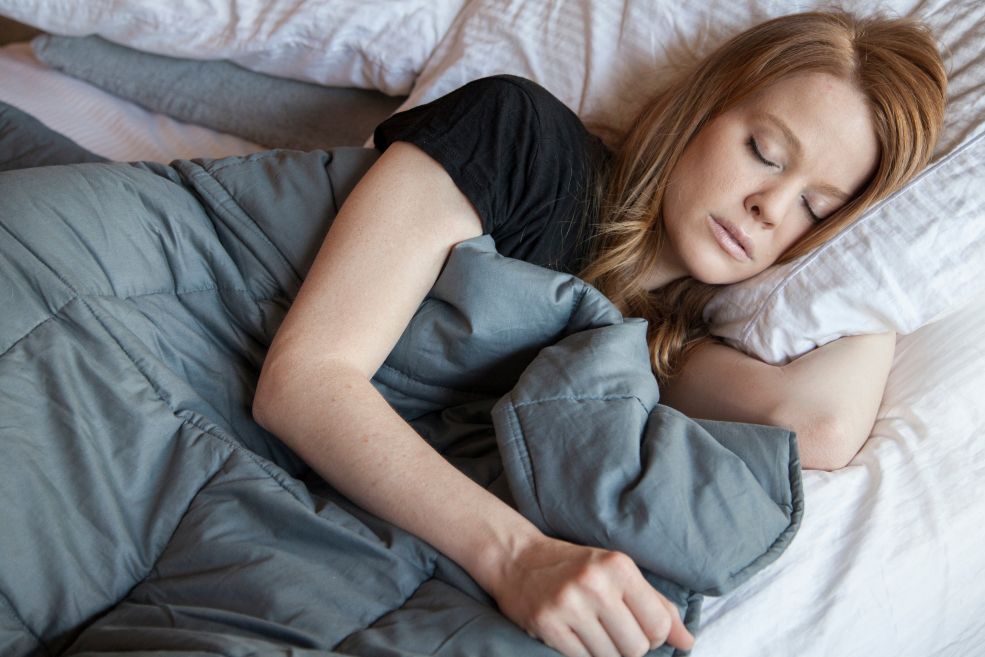
When you have sleep apnea, getting and staying asleep can be a challenge. In fact, many patients are willing to try a variety of remedies to help them achieve the rest they deserve, no matter how unconventional. If you’ve heard about weighted blankets and wondering if they might be able to assist you in getting the sleep you need, here’s a closer look at how they work and if they might be a good choice for you!
What is a Weighted Blanket?
A weighted blanket is essentially a comforter, but instead of being filled with soft fluffy materials, they’re packed with tiny beads made of glass or plastic, giving them additional heft. They’re available in a variety of weights, usually between five and thirty pounds, as well as different dimensions to fit each standard bed size.
While it may not sound very comfortable, you don’t feel the stuffing, just the soft outsides, and the sensation the weight creates is akin to being gently hugged or swaddled like a baby. In many cases, this allows the user to relax and fall asleep faster than with traditional blankets.
How Do Weighted Blankets Work?
Although they’re not specifically designed to treat any medical conditions, weighted blankets can be helpful for patients with a variety of ailments, and work by providing the following benefits:
- Melatonin Production: The excess weight on your body increases its natural melatonin production, helping to fight insomnia.
- Oxytocin Production: Oxytocin is the hormone your body naturally releases whenever you get a hug. Using a weighted blanket can increase that production while you sleep, helping to keep you calm.
- Cortisol Reduction: Cortisol is a stress hormone that is released in moments of tension or duress. Weighted blankets could help lower your body’s production while in use so you can relax and fall asleep.
Do Weighted Blankets Help with Sleep Apnea?
While there are no guarantees that using a weighted blanket will work for everyone, there is some data to suggest that it could help with sleep apnea symptoms. If you’re thinking about trying one, be sure to discuss it with your sleep dentist or doctor first. They can assist you in selecting the right weight, as if it’s too heavy it could actually make your airway issues worse. Furthermore, if you suffer from claustrophobia, using a weighted blanket could potentially intensify feelings of stress or anxiety instead of reducing them.
Remember, using a weighted blanket can be extremely beneficial in helping you fall and stay asleep, but it’s important to choose the right density. If you’d like to try one, speak to your dentist today and see if they could be beneficial to you!
About Dr. Conditt
Dr. Mitch Conditt earned his dental degree at Baylor College of Dentistry in 1985 and today has narrowed his focus to helping patients get the rest they deserve. He is board certified in dental sleep medicine, as well as a diplomate of the American Board of Craniofacial Dental Sleep Medicine and a Fellow of the American Academy of Craniofacial Pain. He is also a member of the American Academy of Orofacial Pain, American Academy of Dental Sleep Medicine, and the Academy of Clinical Sleep Disorders Discipline just to name a few. To schedule an appointment for sleep apnea treatment at Fort Worth Snoring & Sleep Center, visit our website or call us today at 817-527-8500.