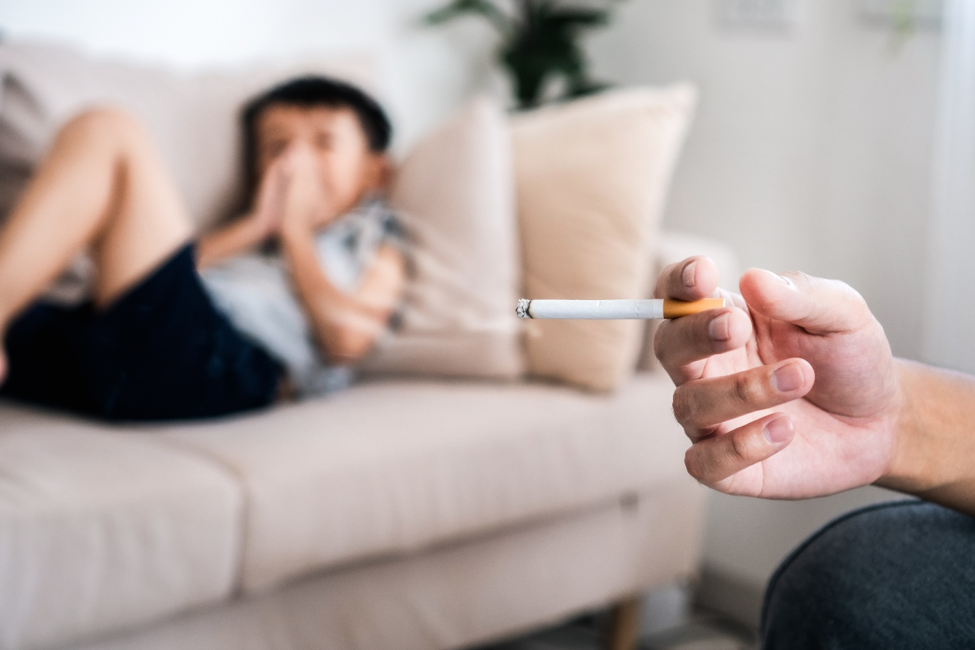
If you’re a parent who smokes or vapes, then you don’t need another lecture or video about how it negatively affects your health. That information is out there, and you’ve likely heard it before. You do your best to shield your child from secondhand smoke (SHS), but new research has revealed that even moderate exposure can contribute to severe sleep-breathing issues, including sleep apnea. What does the science say, and what are signs you can look for to tell if your child might have a sleep problem?
The Research
In a study conducted by the International Journal of Pediatric Otorhinolaryngology, researchers found that children exposed to SHS had a higher rate and increased severity of sleep-breathing problems like sleep apnea. Most notably, the exposed children showed a significantly higher AHI (apnea hypopnea index, used to measure how many apnea episodes or pauses in breathing a person experiences per hour of sleep) compared to those in smoke-free living situations.
While the study didn’t provide a firm conclusion as to why this is the case, this echoes previous research on the subject. Generally, it is believed that regular exposure to smoke irritates and inflames the upper airway as well as increases the production of mucus. Both make it much easier for breathing to be cut off throughout the night.
How to Tell if Your Child Has Sleep Apnea
While smoking doesn’t guarantee you or your child will develop sleep apnea, it can make the condition much worse. If your child exhibits any of the following, it might be wise to schedule them for a screening:
- Loud snoring (often with gasps or snorts)
- Pauses in breathing during sleep
- Restless sleep or frequent tossing and turning
- Sleeping in unusual positions (e.g., hyperextended neck, sitting up to sleep)
- Nighttime sweating (due to increased effort to breathe)
- Bedwetting (new or recurring, especially in older children)
- Mouth breathing during sleep
- Morning headaches or dry mouth upon waking
- Excessive daytime sleepiness (falling asleep in school or during screen time)
- Difficulty waking up in the morning, even with enough total sleep time
- Behavioral issues (hyperactivity, inattention, aggression, or impulsivity—often misdiagnosed as ADHD)
- Poor school performance or trouble concentrating
- Irritability, mood swings, or depression
- Chest retractions (visible pulling in of the ribcage during sleep in younger children)
What to Do Next
If any of the above sound familiar, having your child examined by a professional is paramount, as leaving the condition untreated can impact them both in the short and long term. A trained sleep dentist is a resource that many parents aren’t familiar with, but they are experts at examining the upper airway (i.e., the mouth) and seeing obvious signs of a problem. Professional intervention offers a direct path to treatment, which means deeper sleep, better health, and better days.
And of course, quitting smoking can also be a big help, but that’s easier said than done. Sleep dentists can also help you navigate this process so it’s relatively comfortable and straightforward, all without judgment or moralizing. You just want the best for your child like every other parent, and with a little help, you can ensure they always get the rest they need.
About the Author
Since earning his DDS from the Baylor College of Dentistry in 1985, Dr. Mitch Conditt has zeroed in on one mission: giving patients the deep, restorative sleep they truly deserve. With board certification in dental sleep medicine, Diplomate status with the American Board of Craniofacial Dental Sleep Medicine, and a Fellowship in the American Academy of Craniofacial Pain, his credentials speak for themselves.
Think you or your child might be struggling with sleep apnea? Reach out to Fort Worth Snoring & Sleep Center online or call 817-527-8500 to book your appointment today.