
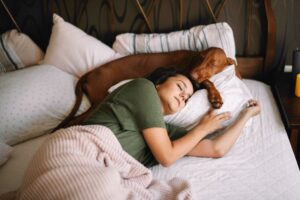
If you share your home with a cat or dog, you know how much joy and companionship your furry friend brings. They are undoubtedly an important part of your family, but have you ever considered how sleeping with your pet might influence the quality of your rest? This article will guide you through the potential benefits and drawbacks of sharing your bed with your pet, especially if you have sleep apnea.
The Upsides of Sleeping with Your Pet
Allowing your pet to sleep by your side can offer several advantages:
- You may find comfort and security in the presence of your pet, which can help you drift off more quickly and experience deeper, more restorative sleep.
- Many people who deal with emotional challenges, such as anxiety or depression, discover that the companionship of a cat or dog at night eases troubling symptoms.
- There is even scientific research to suggest that petting a dog can lower your blood pressure and heart rate, supporting better overall health and well-being.
Potential Downsides to Consider
Although sleeping with a pet can be comforting, sharing your bed with your pet is not without its disadvantages:
- If you suffer from even mild allergies to pet dander, your ability to breathe comfortably at night might be compromised.
- Pets can sometimes carry harmful germs, which introduces a small risk of illness.
- The movements and activities of your animal may also disrupt your sleep efficiency, causing you to spend less time actually sleeping and more time simply lying in bed.
What If You Live with Sleep Apnea?
If you struggle with sleep apnea, you should tread carefully when deciding whether to let your pet into your bed.
Allergies and nasal congestion can exacerbate the breathing difficulties that already accompany sleep apnea, making restful sleep harder to achieve. To minimize these issues, you should adopt a diligent cleaning routine for your bedroom and maintain regular grooming for your pet.
Another factor to bear in mind is your pet’s curiosity. Cats and dogs are known for chewing or playing with objects, which means your CPAP machine or custom oral appliance could be at risk. If you allow your pet access to your bedroom, watch them closely and consider some training to protect your sleep apnea equipment.
Making the Right Decision for Your Sleep and Health
Ultimately, the choice to sleep with your pet is a personal one. Weigh all the factors and carefully consider your needs as you design a sleep routine that works for your health and lifestyle.
Meet the Practice
Dr. Mitch Conditt is a dentist with decades of experience. In recent years, he has focused his career exclusively on helping patients cope with sleep apnea through the use of oral appliance therapy. If you would like our team’s help to achieve better-quality rest each night, we would be pleased to consult with you. Contact our Fort Worth office at 817-527-8500.